Label: MODE
No.: MOD-LP#127
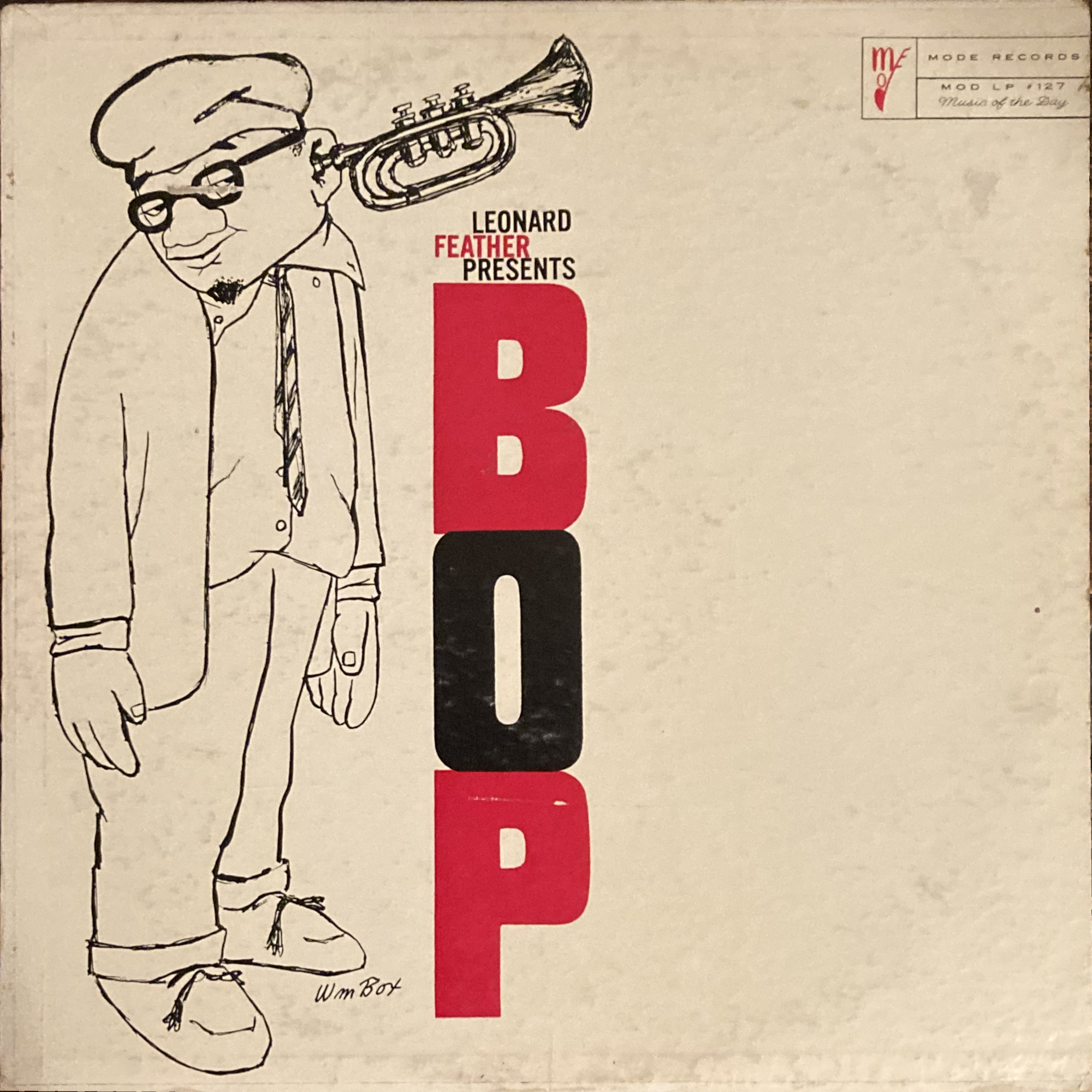
Title: LEONARD FEATHER PRESENTS BOP
Musician: V/A
Recorded: Aug-57
Monaural
Cover address: None
Coating
Groove Guard
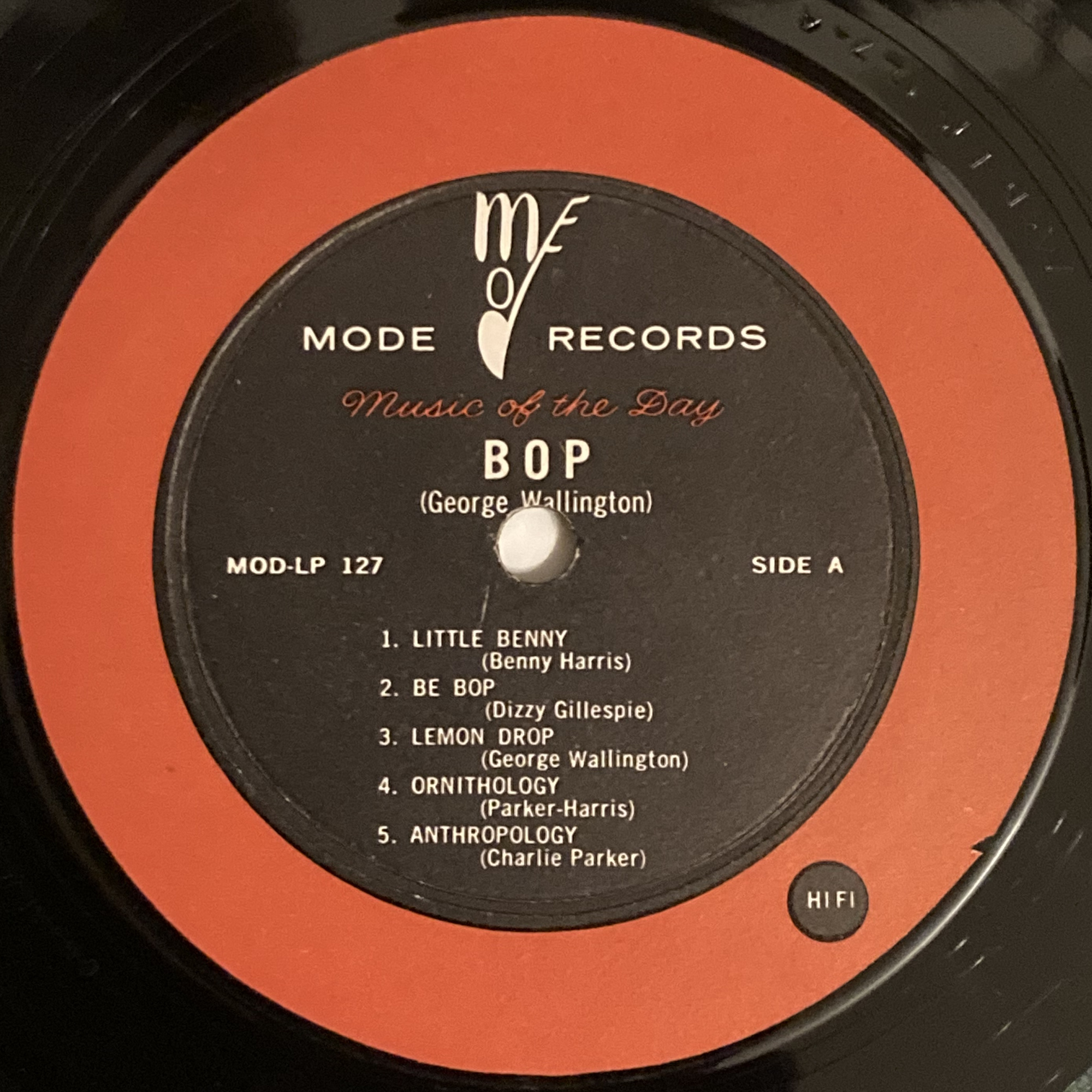
Label Side-A
Black & Orange Background
White Letter
Address: None
Deep Groove
Dead Wax Info: MOD-LP-127-A, US PAT, 1
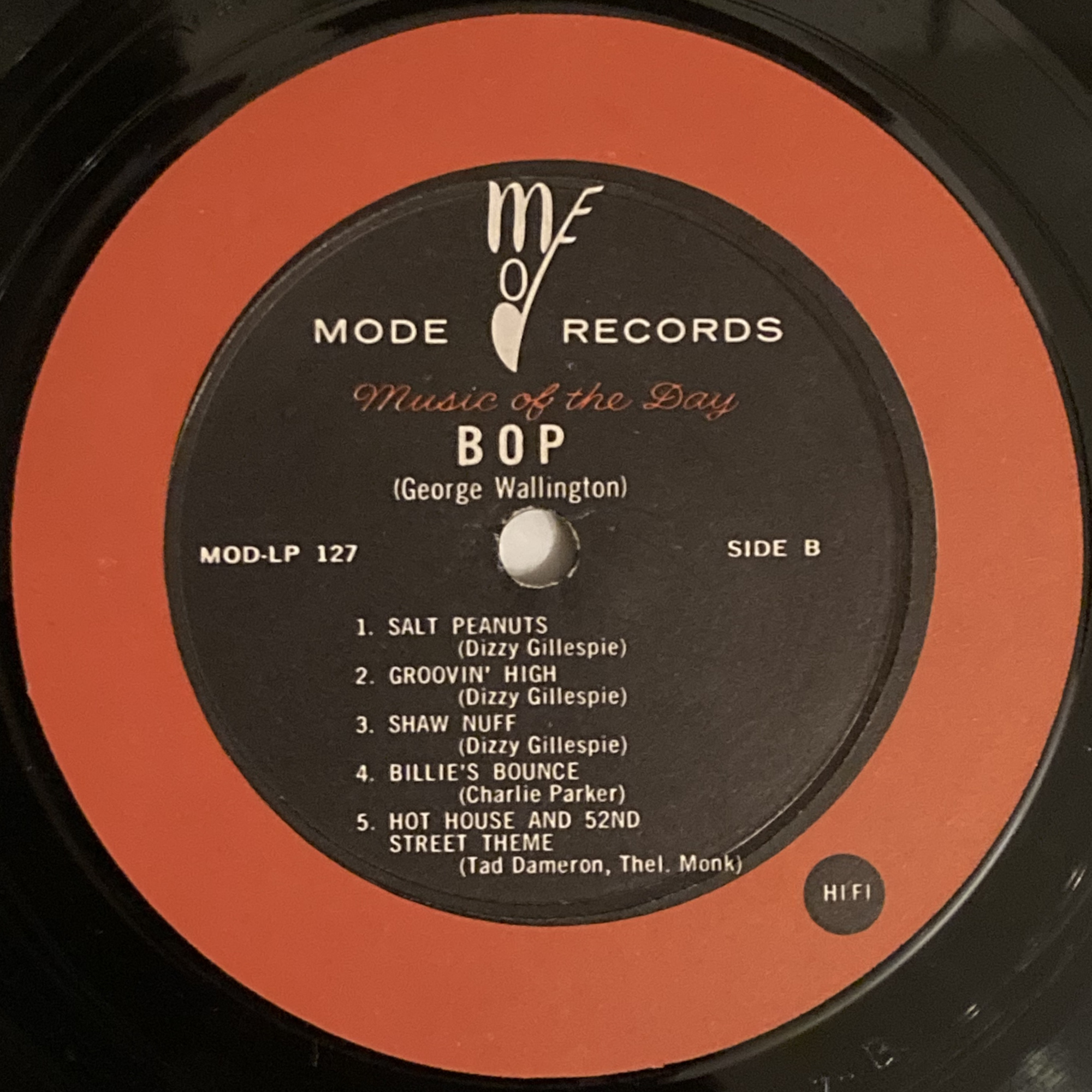
Label Side-B
Black & Orange Background
White Letter
Address: None
Deep Groove
Dead Wax Info: MOD-LP-127-B, US PAT, 1
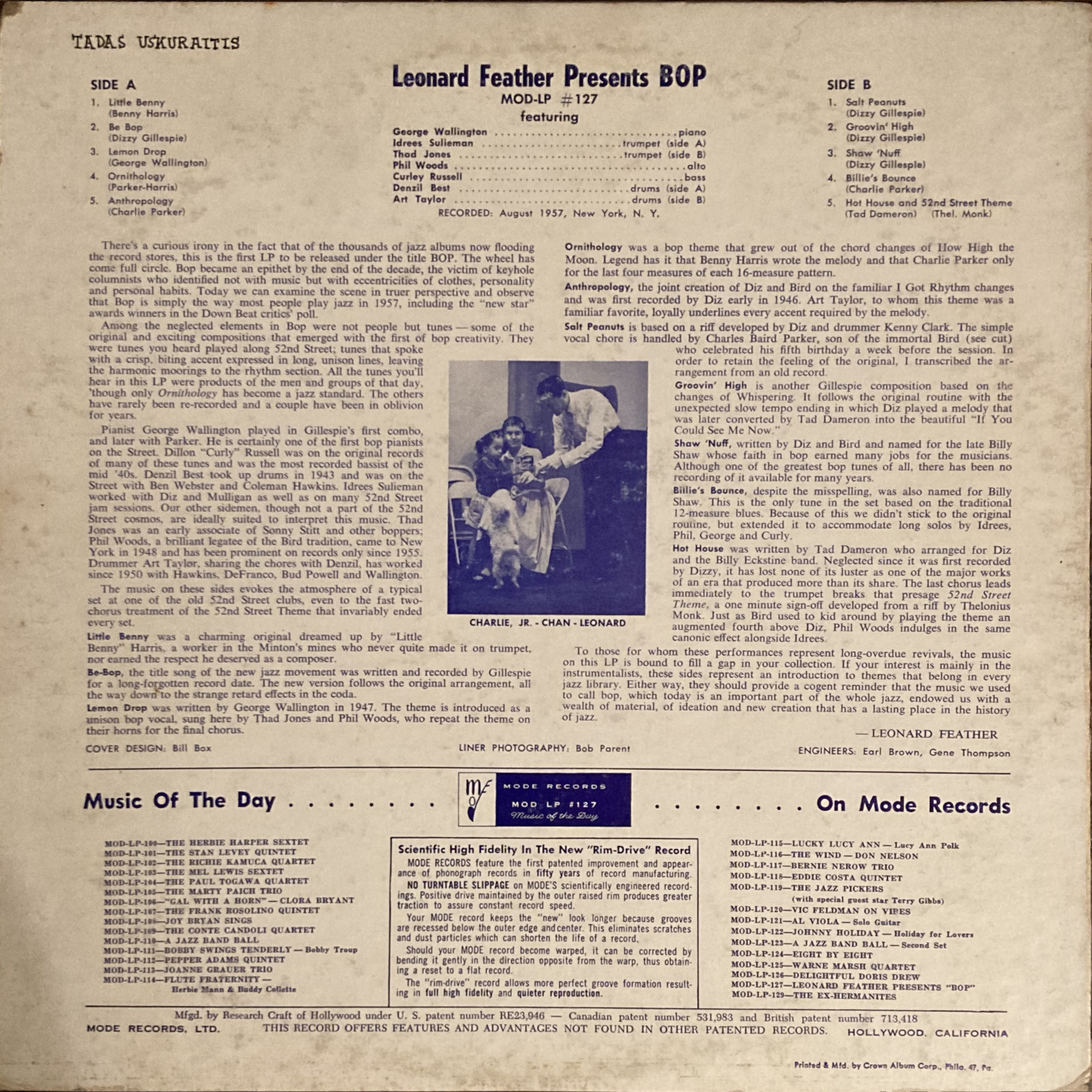
Personnel-
Drums: Denzil Best (Side-A), Art Taylor(Side-B)
Bass: Curley Russell
Piano: George Wallington
Alto Sax: Phil Woods
Trumpet: Idrees Sulieman(Side-A), Thad Jones(Side-B)
Tracks-
Side-A
1) Little Benny
2) Be Bop
3) Lemon Drop
4) Ornithology
5) Anthropology
Side-B
1) Salt Peanuts
2) Groovin’ High
3) Show ‘Nuff
4) Billie’s Bounce
5) Hot House and 52nd Street Theme
<裏ジャケ原文>
There’s a curious irony in the fact that of the thousands of jazz albums now flooding the record stores, this is the first LP to be released under the title BOP. The wheel has come full circle. Bop became an epithet by the end of the decade, the victim of keyhole columnists who identified not with music but with eccentricities of clothes, personality and personal habits. Today we can examine the scene in truer perspective and observe that Bop is simply the way most people play jazz in 1957, including the “new star” awards winners in the Down Beat critics’ poll.
Among the neglected elements in Bop were not people but tunes – some of the original and exciting compositions that emerged with the first of bop creativity. They were tunes you heard played along 52nd Street; tunes that spoke with a crisp, biting accent expressed in long, unison lines, leaving the harmonic moorings to the rhythm section. All the tunes you’ll hear in this LP were products of the men and groups of that day, ‘though only Ornithology has become a jazz standard. The others have rarely been re-recorded and a couple have been in oblivion for years.
Pianist George Wallington played in Gillespie’s first combo, and later with Parker. He is certainly one of the first bop pianists on the Street. Dillon “Curly” Russell was on the original records of many of these tunes and was the most recorded bassist of the mid ’40s. Denzil Best took up drums in 1943 and was on the Street with Ben Webster and Coleman Hawkins. Idrees Sulieman worked with Diz and Mulligan as well as on many 52nd Street jam sessions. Our other sidemen, though not a part of the 52nd Street cosmos, are ideally suited to interpret this music. Thad Jones was an early associate of Sonny Stitt and other boppers; Phil Woods, a brilliant legatee of the Bird tradition, came to New York in 1948 and has been prominent on records only since 1955. Drummer Art Taylor, sharing the chores with Denzil, has worked since 1950 with Hawkins, DeFranco, Bud Powell and Wallington. The music on these sides evokes the atmosphere of a typical set at one of the old 52nd Street clubs, even to the fast two- chorus treatment of the 52nd Street Theme that invariably ended every set.
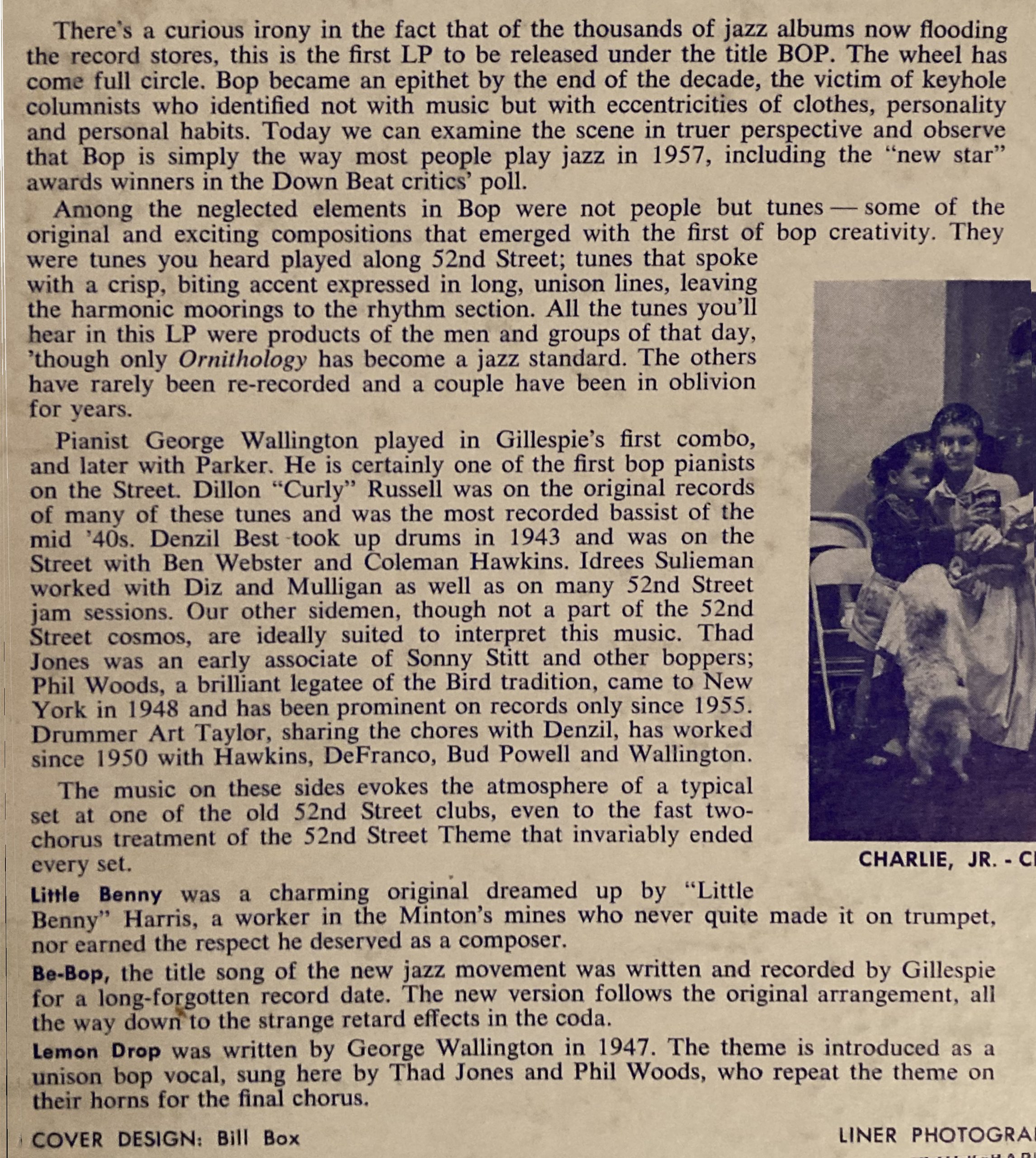
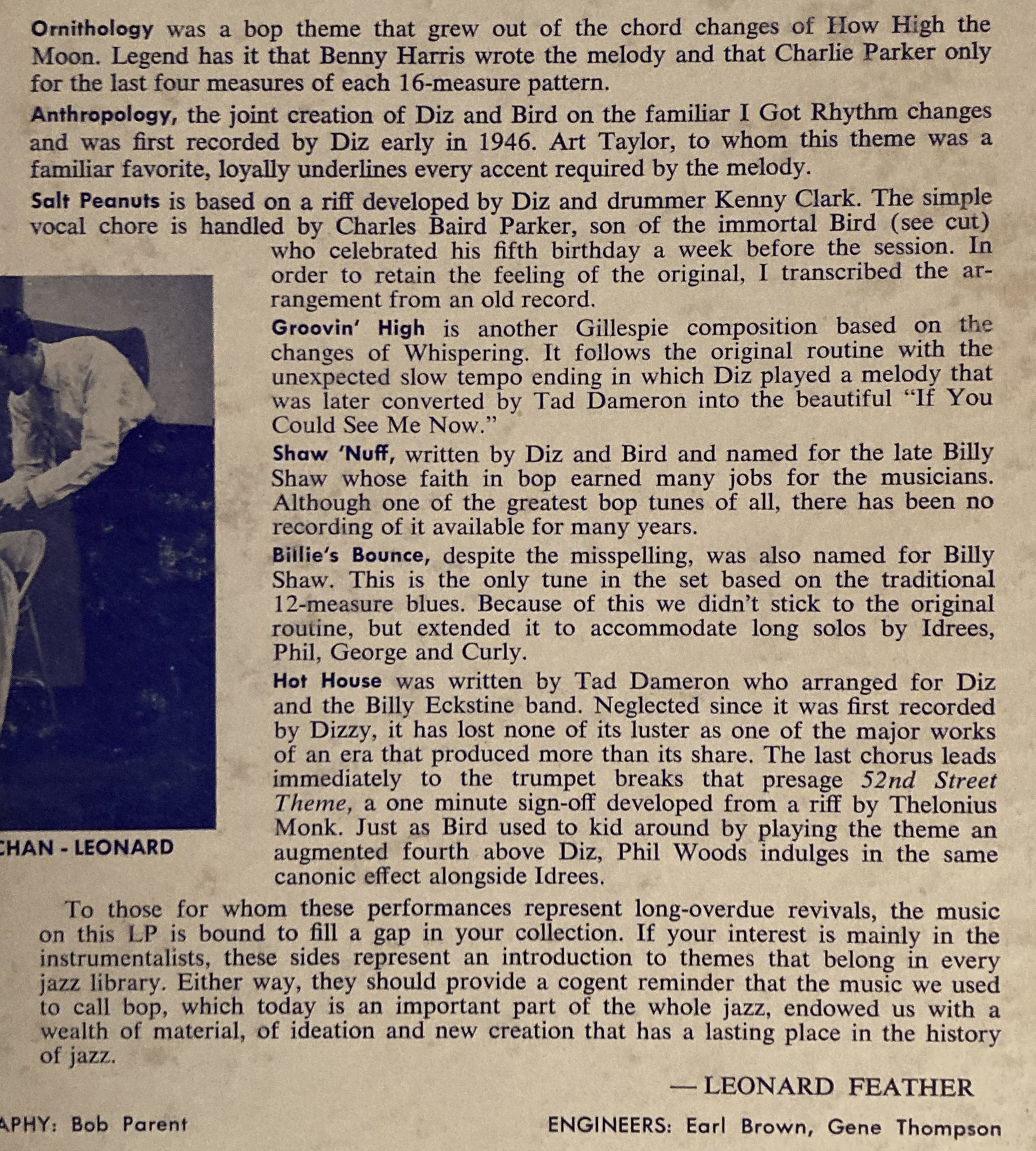
CHARLIE, JR. – C
Little Benny was a charming original dreamed up by “Little Benny” Harris, a worker in the Minton’s mines who never quite made it on trumpet, nor earned the respect he deserved as a composer.
Be-Bop, the title song of the new jazz movement was written and recorded by Gillespie for a long-forgotten record date. The new version follows the original arrangement, all the way down to the strange retard effects in the coda.
Lemon Drop was written by George Wallington in 1947. The theme is introduced as a unison bop vocal, sung here by Thad Jones and Phil Woods, who repeat the theme on their horns for the final chorus.
Ornithology was a bop theme that grew out of the chord changes of How High the Moon. Legend has it that Benny Harris wrote the melody and that Charlie Parker only for the last four measures of each 16-measure pattern.
Anthropology, the joint creation of Diz and Bird on the familiar I Got Rhythm changes and was first recorded by Diz early in 1946. Art Taylor, to whom this theme was a familiar favorite, loyally underlines every accent required by the melody.
Salt Peanuts is based on a riff developed by Diz and drummer Kenny Clark. The simple vocal chore is handled by Charles Baird Parker, son of the immortal Bird (see cut)
CHAN LEONARD
who celebrated his fifth birthday a week before the session. In order to retain the feeling of the original, I transcribed the ar- rangement from an old record.
Groovin’ High is another Gillespie composition based on the changes of Whispering. It follows the original routine with the unexpected slow tempo ending in which Diz played a melody that was later converted by Tad Dameron into the beautiful “If You Could See Me Now.”
Shaw ‘Nuff, written by Diz and Bird and named for the late Billy Shaw whose faith in bop earned many jobs for the musicians. Although one of the greatest bop tunes of all, there has been no recording of it available for many years.
Billie’s Bounce, despite the misspelling, was also named for Billy Shaw. This is the only tune in the set based on the traditional 12-measure blues. Because of this we didn’t stick to the original routine, but extended it to accommodate long solos by Idrees, Phil, George and Curly.
Hot House was written by Tad Dameron who arranged for Diz and the Billy Eckstine band. Neglected since it was first recorded by Dizzy, it has lost none of its luster as one of the major works of an era that produced more than its share. The last chorus leads immediately to the trumpet breaks that presage 52nd Street Theme, a one minute sign-off developed from a riff by Thelonius Monk. Just as Bird used to kid around by playing the theme an augmented fourth above Diz, Phil Woods indulges in the same canonic effect alongside Idrees.
To those for whom these performances represent long-overdue revivals, the music on this LP is bound to fill a gap in your collection. If your interest is mainly in the instrumentalists, these sides represent an introduction to themes that belong in every jazz library. Either way, they should provide a cogent reminder that the music we used to call bop, which today is an important part of the whole jazz, endowed us with a wealth of material, of ideation and new creation that has a lasting place in the history of jazz.
COVER DESIGN: Bill Box
LINER PHOTOGRAPHY: Bob Parent
- LEONARD FEATHER ENGINEERS: Earl Brown, Gene Thompson
<裏ジャケ和訳>
現在レコード店に溢れる数千枚ものジャズ・アルバムの中で、『BOP(ボップ)』というタイトルを冠してリリースされた最初のLPが本作であるというのは、奇妙な皮肉と言えるでしょう。まさに時代は一巡したのです。1940年代が終わる頃には、「ボップ」という言葉は一種の蔑称のようになっていました。音楽そのものではなく、服装や性格、私生活の奇行ばかりを取り上げるゴシップ記事の書き手たちの犠牲になったからです。しかし今日、私たちは当時のシーンをより正確な視点から捉えることができます。そして、ダウン・ビート誌の批評家投票で「ニュースター(新人)」賞に選ばれた人々を含め、1957年現在、多くのミュージシャンが演奏するジャズのスタイルこそが、実は「ボップ」なのだと認識できるのです。
ボップの歴史の中で軽視されてきたのは、特定の人物ではなく、楽曲そのものでした。ボップの創造性が最初に花開いた時期に生まれた、独創的で刺激的な名曲の数々です。それらはかつて52丁目(フィフティ・セカンド・ストリート)で演奏されていた曲であり、リズム・セクションにハーモニーの土台を任せ、長く伸びるユニゾンのラインによって、歯切れよく鋭いアクセントで語りかけるような楽曲でした。このLPに収録されている曲はすべて、当時のミュージシャンやグループによって生み出されたものですが、「オーニソロジー(Ornithology)」だけがジャズ・スタンダードとして定着しました。他の曲が再録音されることは稀で、中には長い間忘れ去られていたものもあります。
ピアニストのジョージ・ウォーリントンは、ディジー・ガレスピーの最初のコンボや、後にチャーリー・パーカーとも共演しました。彼は間違いなく、52丁目における最初期のボップ・ピアニストの一人です。ディロン・“カーリー”・ラッセルは、これらの曲の多くが最初に録音された際のメンバーであり、1940年代半ばに最も多くの録音に参加したベーシストでした。デンジル・ベストは1943年にドラムを始め、ベン・ウェブスターやコールマン・ホーキンスと共に52丁目で活動しました。イドリース・スレイマンは、ディジーやジェリー・マリガンと共演したほか、52丁目での数多くのジャム・セッションにも参加しています。他のサイドマンたちも、52丁目の世界そのものに属していたわけではありませんが、この音楽を解釈するのに理想的な適性を持っています。サド・ジョーンズは、ソニー・スティットやその他のボップ・ミュージシャンと初期から関わりがありました。 「バード(チャーリー・パーカー)」の伝統を鮮やかに受け継ぐフィル・ウッズは、1948年にニューヨークへ進出しましたが、レコードでその名が広く知られるようになったのは1955年以降のことです。ドラマーのアート・テイラーはデンジルと役割を分担しつつ、1950年以来、ホーキンス、デフランコ、バド・パウエル、ウォリントンらと共演を重ねてきました。本作に収録された演奏は、かつて52丁目にあったクラブでの典型的なセットの雰囲気を彷彿とさせます。そこには、どのセットの締めくくりにも必ず演奏された「52nd Street Theme」を、2コーラスの高速テンポで演奏するスタイルさえも再現されています。
CHARLIE, JR. – C
「Little Benny」は、「リトル・ベニー」ことハリスが考案した魅力的なオリジナル曲です。ハリスはミントンズ・プレイハウスという「鉱脈(才能の宝庫)」で働いていた人物ですが、トランペット奏者として大成することはなく、作曲家として本来受けるべき評価も得られませんでした。
新しいジャズ・ムーブメントの代名詞とも言えるタイトル曲「Be-Bop」は、かつて忘れ去られていたレコーディング・セッションのために、ガレスピーが作曲・録音したものです。今回の新バージョンは、コーダ(終結部)に見られる独特なリタルダンド(だんだん遅くする)の効果に至るまで、オリジナルのアレンジを忠実に踏襲しています。
「Lemon Drop」は、1947年にジョージ・ウォリントンが作曲した曲です。テーマはユニゾンによるバップ・ボーカル・スタイルで提示されますが、ここではサド・ジョーンズとフィル・ウッズが歌い、最後のコーラスでは彼らが自身の楽器(ホーン)でそのテーマを繰り返しています。
「オーニソロジー(Ornithology)」は、「ハウ・ハイ・ザ・ムーン(How High the Moon)」のコード進行から生まれたバップ・ナンバーです。伝説によれば、メロディを書いたのはベニー・ハリスで、チャーリー・パーカーが担当したのは各16小節パターンの最後の4小節だけだったと言われています。
「アンソロポロジー(Anthropology)」は、お馴染みの「アイ・ガット・リズム(I Got Rhythm)」の進行を基にディジーとバードが共作した曲で、1946年初頭にディジーによって初めて録音されました。この曲を愛奏していたアート・テイラーは、メロディが要求するあらゆるアクセントを忠実に強調しています。
「ソルト・ピーナッツ(Salt Peanuts)」は、ディジーとドラマーのケニー・クラークが作り上げたリフを基にしています。シンプルなボーカル・パートを担当しているのは、不滅のバードの息子であるチャールズ・ベアード・パーカー(写真参照)です。
チャン・レナード
彼はセッションの1週間前に5歳の誕生日を迎えたばかりでした。オリジナルの雰囲気を残すため、私は古いレコードからアレンジを採譜しました。
「グルーヴィン・ハイ(Groovin’ High)」もまた、「ウィスパリング(Whispering)」の進行を基にしたガレスピーの作曲によるものです。オリジナルの構成を踏襲しつつ、予期せぬスローテンポのエンディングが特徴で、そこでディジーが吹いたメロディは、後にタッド・ダメロンによって美しいバラード「イフ・ユー・クッド・シー・ミー・ナウ(If You Could See Me Now)」へと発展させられました。
「ショー・ナフ(Shaw ‘Nuff)」はディジーとバードの共作で、故ビリー・ショーの名にちなんで名付けられました。彼はバップを信じ、多くのミュージシャンに仕事をもたらした人物です。バップ屈指の名曲でありながら、長年にわたって入手可能な録音が存在しませんでした。
「ビリーズ・バウンス(Billie’s Bounce)」も、スペルは間違っていますが、やはりビリー・ショーにちなんで名付けられました。このセットの中で、伝統的な12小節のブルース形式に基づいた唯一の曲です。そのため、オリジナルの構成に固執せず、イドリース、フィル、ジョージ、カーリーによる長いソロを盛り込めるよう演奏を拡張しました。
「ホット・ハウス(Hot House)」は、ディジーやビリー・エクスタイン・バンドのアレンジを手がけたタッド・ダメロンによって書かれました。ディジーによる初録音以来しばらく顧みられませんでしたが、数多くの名曲を生んだあの時代の主要作品の一つとして、その輝きは少しも失われていません。最後のコーラスから間髪入れずにトランペットのブレイクへと移行し、そこからセロニアス・モンクの書いたリフを基にした1分間のエンディング曲「52nd Street Theme」が始まります。かつて「バード」(チャーリー・パーカー)がディジーに対して増4度上のキーでテーマを演奏し、おどけてみせたのと同様に、ここでもフィル・ウッズがイドリースと並んでカノン風の掛け合いを披露しています。
これらの演奏を、長らく待ち望まれていた「復活」と捉える人々にとって、このLPに収録された音楽は、自身のコレクションの欠落を埋める貴重な一枚となるはずです。もし楽器奏者としての彼らに主な関心があるとしても、ここに収められた楽曲は、あらゆるジャズ・ライブラリーに欠かせない名曲を知るための格好の入門編と言えるでしょう。いずれにせよ、かつて「バップ」と呼ばれ、今やジャズという音楽全体の中で重要な位置を占めるこのスタイルが、ジャズの歴史に永続的に残る数多くの楽曲やアイデア、そして新たな創造の源泉を私たちにもたらしてくれたことを、本作は改めて強く認識させてくれるはずです。
カバー・デザイン:ビル・ボックス
ライナーノーツ用写真:ボブ・ペアレント
- レオナード・フェザー エンジニア:アール・ブラウン、ジーン・トンプソン
※訳文の制作にはGoogleドライブとGoogle翻訳のお世話になりました。
コメント